
Introduction
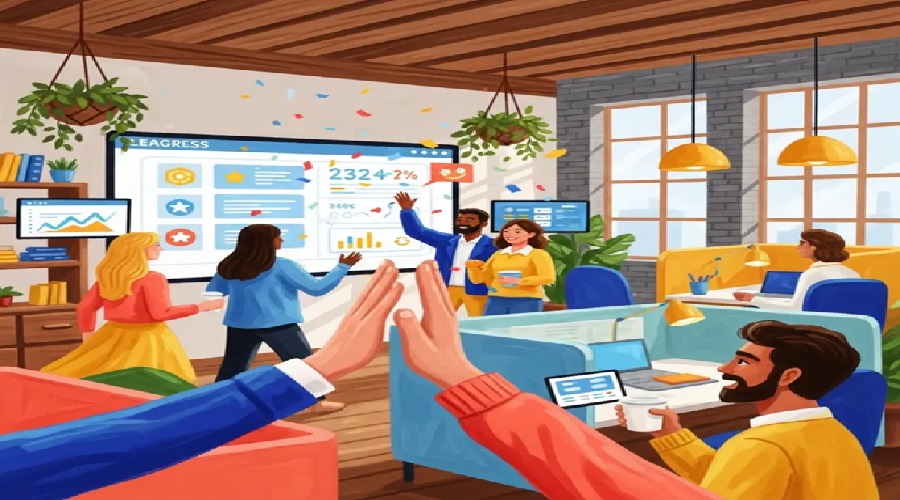
In today’s dynamic business environment, leveraging sales team engagement tactics is crucial for boosting performance and enhancing daily productivity. This post explores how innovative gamification strategies transform traditional sales processes by introducing sales gamification strategies, gamified sales training, and employee productivity gamification. The objective is to achieve sales performance enhancement and spark behavior-driven sales motivation. The integration of gamified CRM training plays a significant role in this transformative journey.
Gamification in Sales – Overview and Why It’s Booming
Sales gamification involves applying game mechanics, such as points, badges, levels, quests, and leaderboards, to sales workflows. These sales gamification strategies align with revenue goals, offering a refreshing angle on traditional methods. Because sales is target-driven and thrives on competition, leaderboards naturally resonate, moving beyond sporadic reward systems to sustained sales performance enhancement. The rise of hybrid and remote work highlights the need for digital engagement, and CRMs with real-time data integration are perfect for in-platform game mechanics. Additionally, integrating gamification of training and development in onboarding modernizes the sales training process.
Driving Performance – Goals, KPIs, Leaderboard Culture
Gamification transforms broad quotas into narrowly trackable goals, breaking down annual targets into daily or weekly KPIs like pipeline creation, meetings booked, opportunities advanced, and win rates. Each KPI becomes a scoring event, emphasizing behavior-driven sales motivation. Leaderboards amplify the competitive spirit by categorizing achievements into revenue, activity completion, or improvement streaks, effectively balancing rivalry with collaboration. These sales team engagement tactics create momentum by highlighting consistent behavior. For more strategies, discover the benefits of gamification in corporate training.
Daily Productivity Triggers – Micro Goals, Real-Time Insights
Micro-goals are central to employee productivity gamification. Objectives like “10 qualified calls before noon” or “2 new opportunities before lunch” become attainable benchmarks, delivering immediate feedback through points or streaks. Real-time dashboards display progress against these daily productivity triggers, reducing procrastination and aligning every task with broader strategies. For additional insights, explore additional insights on driving productivity through gamification techniques.
Engagement for Motivation – Challenges, Points, Recognition
Motivational energizers—points, levels, time-bound challenges—continue fueling enthusiasm. Recognition is key; achievements trigger notifications in team chats, underscoring the power of sales team engagement tactics. Balancing external rewards with opportunities for mastery, gamification offers both prizes and status, reinforcing identities such as “Prospecting Champion” or “CRM Hero.” Rotating challenge themes avoids “game fatigue,” keeping participants engaged and reinforcing behavior-driven sales motivation. For more on boosting motivation, learn from our free guide on enhancing engagement.
CRM Training Gamified – Task Simulation, Tool Familiarization
CRM adoption frequently stalls due to tedious administrative tasks. However, gamified sales training can boost platform usage and integration. Quests like “Log your first 20 leads correctly” or simulating real-life tool usage achieve badges and points, promoting both loyalty and skill. Replicating practical workflows through game-based learning enhances sales performance enhancement, seamlessly linking training to real-world performance.
Analytics and Behavior – Measuring Improvement
Analytics is the backbone of effective gamification. Tracking calls, emails, outcomes, and game progress helps identify successful patterns. Cohort and trend analysis allow teams to compare results by role and detect skill gaps for targeted coaching. Connecting game performance data with analytics unlocks sales performance enhancement by amplifying proven strategies and driving behavior-driven sales motivation. To understand how to measure success, see key metrics for gamification.
Getting Started – Platforms, Pilot Setup, Feedback Loops
Choosing the right gamification platform is pivotal. Integration with CRM tools and real-time feedback mechanisms is vital, and collaborating with a Unity Game Development Company can yield custom solutions. Begin with a 60-90 day pilot targeting a few KPIs. Collect feedback on point allocations, challenge durations, and interface design to align with your organization’s sales values. This foundation of sales gamification strategies fosters lasting improvement.
Conclusion – Energizing Sales with Meaningful Play
Ultimately, gamification delivers a behavior-focused framework that drives daily productivity and sustains sales performance enhancement. By unifying gamified sales training with real-time sales tactics, continuous improvement becomes second nature. Reps gain clarity and recognition, while managers benefit from insightful analytics. Businesses enjoy consistent revenue gains. Begin by introducing sales gamification strategies in one process area, then use analytics for iterative upgrades that ensure ongoing success.
FAQ
- How does sales gamification differ from traditional sales training?
Sales gamification integrates game-like challenges, points, and leaderboards into regular sales activities, making skill development and target achievement more engaging than conventional training sessions. - Is gamification suitable for all types of sales teams?
Most sales environments can benefit from gamification, but the exact approach and mechanics should be tailored to team culture, product lines, and organizational goals.
How do we measure success in a gamified sales program?
Tracking both quantitative metrics—like closed deals, pipeline growth, and activity completion—and qualitative feedback ensures ongoing refinements and aligns the program with sales objectives.