
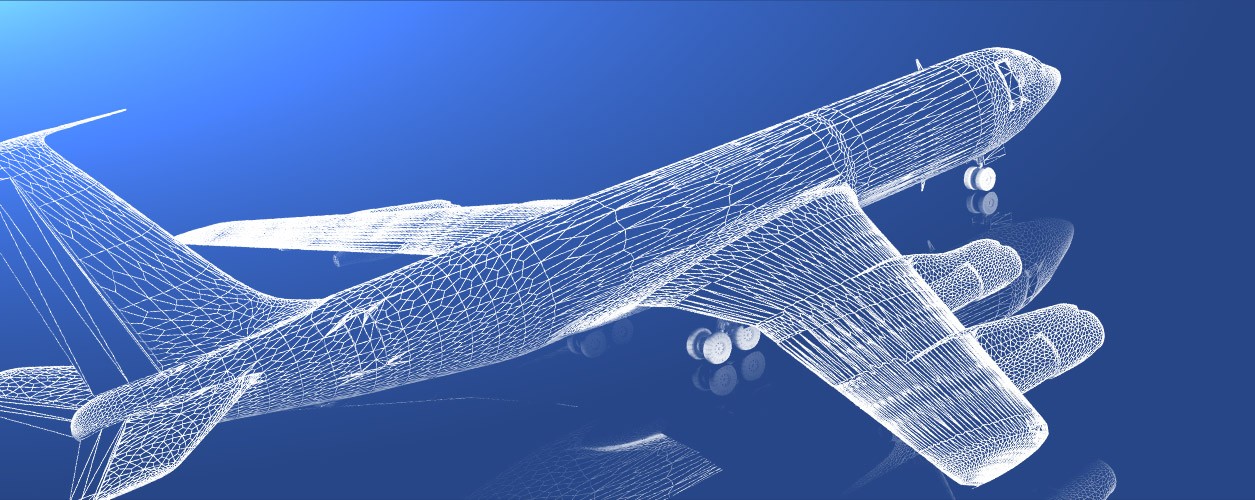
In the world of flight, aerodynamics serves as the invisible architect behind every successful aircraft. From the moment an aircraft lifts off to the second it lands, aerodynamics governs how smoothly, efficiently, and safely it travels through the sky. In modern aero engineering, aerodynamics plays a pivotal role—not just in design, but also in performance, innovation, and sustainability. As aviation continues to evolve, the demand for advanced aerodynamic solutions has become more crucial than ever.
This article delves into the importance of aerodynamics in modern aero engineering, highlighting key concepts, real-world applications, technological innovations, and the future of flight.
What Is Aerodynamics?
Aerodynamics is the branch of physics that deals with the motion of air and other gases. It explores how air interacts with solid bodies—particularly those in motion, like aircraft. The key aerodynamic forces include:
- Lift: The upward force that counters gravity.
- Drag: The resistance force opposing an aircraft’s motion.
- Thrust: The forward-driving force provided by engines.
- Weight: The downward force caused by gravity.
The science of aerodynamics enables engineers to optimize aircraft shape and performance, making it a core discipline in aerospace engineering.
Historical Evolution of Aerodynamics in Aviation
Early Beginnings
The understanding of aerodynamics dates back to ancient times, but it gained significant scientific traction in the late 19th and early 20th centuries with pioneers like Otto Lilienthal and the Wright brothers. Their gliders and powered aircraft were designed with the basic principles of airflow and lift.
World Wars and Technological Advancement
Both World Wars accelerated the demand for aerodynamic research, leading to innovations like streamlined fuselages, variable-pitch propellers, and swept wings. Wind tunnels became standard in research and testing environments.
The Jet Age to Modern Era
The introduction of jet engines and supersonic flight further pushed the boundaries. Modern aircraft now benefit from computational fluid dynamics (CFD), wind tunnel simulations, and AI-based optimization to enhance aerodynamic performance.
Why Aerodynamics Is Vital in Modern Aero Engineering
1. Fuel Efficiency and Environmental Sustainability
Aerodynamically efficient designs help reduce drag, which directly lowers fuel consumption. In commercial aviation, even a 1% improvement in fuel efficiency can save millions of dollars annually. More efficient aircraft also contribute to reduced carbon emissions, aligning with global sustainability goals.
Example:
The Boeing 787 Dreamliner uses advanced aerodynamic shaping and composite materials to reduce drag and improve fuel efficiency by up to 20% compared to older models.
2. Performance and Speed Optimization
Aircraft with superior aerodynamic designs experience higher speeds, better maneuverability, and enhanced climb rates. This is especially critical for military jets, drones, and space vehicles, where speed and responsiveness are mission-critical.
Example:
The F-22 Raptor and F-35 Lightning II use stealth and aerodynamic shaping to fly faster, evade radar, and maintain excellent maneuverability.
3. Flight Stability and Control
Aerodynamics is key to ensuring flight stability, balance, and control. Engineers use control surfaces (e.g., flaps, rudders, elevators) in combination with aerodynamic design to maintain consistent flight behavior under varying conditions.
4. Safety and Structural Integrity
An aerodynamically unstable aircraft is vulnerable to stalling, turbulence, and structural stress. Modern engineering tools help simulate airflow and pressure points, allowing for design refinements before manufacturing.
Example:
Modern Airbus and Boeing jets go through millions of CFD iterations to ensure aerodynamic safety under worst-case scenarios.
Core Aerodynamic Principles in Aircraft Design
1. Airfoil Design
Airfoils (the cross-sectional shape of a wing) are optimized to generate maximum lift with minimal drag. Variations include:
- Cambered airfoils: For higher lift
- Symmetrical airfoils: Used in acrobatic or supersonic aircraft
2. Wing Configuration
Designs vary based on use:
- Swept Wings: Reduce drag at high speeds (common in jets)
- Delta Wings: Offer high maneuverability (used in fighter jets)
- Blended Wing Body (BWB): Experimental and futuristic aircraft designs improving lift-to-drag ratios
3. Boundary Layer Management
The boundary layer is the thin air layer close to the aircraft surface. Managing it reduces drag and delays flow separation.
Techniques include:
- Surface texturing (e.g., riblets)
- Laminar flow control
- Suction systems to manage airflow
4. Drag Reduction Strategies
Drag comes in several forms:
- Parasite drag: Caused by the shape of the aircraft
- Induced drag: Due to lift generation
- Wave drag: Found at transonic/supersonic speeds
Aerodynamic engineers employ:
- Streamlined designs
- Winglets (reduce vortex drag)
- Fairings (smooth out joints and intersections)
Modern Tools and Technologies Used in Aerodynamic Design
1. Computational Fluid Dynamics (CFD)
CFD software allows engineers to simulate how air flows around an aircraft. It drastically reduces the cost and time compared to physical prototypes.
Popular CFD tools include:
- ANSYS Fluent
- OpenFOAM
- STAR-CCM+
2. Wind Tunnel Testing
Despite CFD, wind tunnels remain vital for real-world validation. These controlled environments allow engineers to test scale models under various flight conditions.
3. Artificial Intelligence and Machine Learning
AI is now being used to optimize shapes, automate simulations, and predict airflow patterns. Algorithms analyze large datasets to improve aerodynamic efficiency with minimal trial-and-error.
Example:
NASA’s X-Plane series utilizes AI to enhance real-time aerodynamic adjustments in experimental aircraft.
Applications of Aerodynamics Beyond Aircraft
While aircraft are the primary beneficiaries, aerodynamic principles are applied in:
- Automotive Engineering: Streamlined cars improve fuel economy and speed.
- Wind Turbines: Blade design relies on airfoil principles.
- Sports Equipment: Bicycles, helmets, and balls are aerodynamically optimized for performance.
- Spacecraft Reentry: Heat shields and shape design manage atmospheric drag and heat.
Future Trends in Aerodynamics and Aero Engineering
1. Electric and Hybrid Aircraft
These aircraft have different weight and thrust profiles, requiring new aerodynamic approaches. Design emphasis is shifting towards noise reduction and energy efficiency.
2. Urban Air Mobility (UAM)
Air taxis and drones demand compact, efficient aerodynamic designs. Engineers are working on multi-rotor systems, tilt-rotor aircraft, and vertical take-off and landing (VTOL) vehicles that balance lift and stability in tight urban airspace.
3. Sustainable Aviation Fuel (SAF) Compatibility
Aerodynamics must complement SAF-powered aircraft, which might have different combustion characteristics and operational needs.
4. Supersonic and Hypersonic Travel
Future aircraft like Boom Supersonic’s Overture and NASA’s X-59 QueSST aim to minimize sonic booms and wave drag, enabling faster-than-sound commercial flight without disturbing populated areas.
Challenges in Aerodynamic Engineering
- Turbulence prediction and control
- High computational costs for CFD
- Balancing aerodynamic efficiency with manufacturing feasibility
- Noise vs. drag trade-offs
- Adapting to unconventional aircraft shapes (e.g., flying wings, morphing structures)
Despite these hurdles, the field continues to evolve rapidly through collaboration among engineers, computer scientists, and environmental scientists.
FAQs
What is the role of aerodynamics in aircraft performance?
Aerodynamics helps optimize lift, reduce drag, and improve overall flight efficiency, stability, and fuel consumption.
How does CFD help in aerodynamic design?
CFD (Computational Fluid Dynamics) allows engineers to simulate and analyze airflow digitally, reducing reliance on physical models.
What is the most aerodynamic aircraft ever built?
The Concorde and modern designs like NASA’s X-59 are considered among the most aerodynamically advanced aircraft, designed to minimize drag and sonic boom effects.
Can better aerodynamics reduce aircraft fuel consumption?
Yes. Even minor aerodynamic improvements can lead to significant fuel savings and reduced carbon emissions.
How is aerodynamics applied in electric aircraft?
Electric aircraft need optimized aerodynamic profiles to compensate for lower thrust-to-weight ratios and to maximize battery efficiency.
Conclusion
Aerodynamics is the cornerstone of modern aero engineering, influencing everything from performance and fuel efficiency to safety and environmental impact. As the aviation industry embraces sustainability, electric propulsion, and advanced materials, aerodynamic design becomes even more critical.
With emerging technologies like AI-driven optimization and urban air mobility, the role of aerodynamics is expanding into new frontiers. Engineers, designers, and researchers must continue to innovate and adapt, ensuring that the skies remain not only accessible—but efficient, safe, and sustainable.